The Clocks Fell Back, But You Don’t Have To
This weekend, New York gained an hour and lost an afternoon. Daylight saving time ended on Sunday, and for the rest of the month the sun will set before 5 p.m. For anyone who works for themselves, that shift matters more than it seems. There’s no office schedule to anchor the day, so when the light goes early, the workday tends to go with it.
The good news: November’s shorter days are predictable. A few deliberate changes this week can keep your output steady straight through to the holidays.
Step One: Move Your Hardest Work Into the Light
Most people do their best thinking in the morning, and the time change makes mornings brighter for a few weeks. Use that.
- Front-load deep work. Put strategy, writing, and anything that needs real focus before lunch. Save email, invoicing, and calls for the afternoon.
- Get outside early. A short walk in morning daylight helps reset your internal clock after the change. Ten minutes around the block before you sit down counts.
- Don’t burn the bright hours on admin. If your inbox gets your best hour every day, it’s getting more than it deserves.
Step Two: Set a Hard Stop, Not a Soft Fade
When it’s dark at 4:45, the end of the workday gets blurry. Some people quit too early because it feels late. Others drift on until 9 p.m. because nothing tells them to stop. Both cost you.
- Pick an end time and put it on the calendar. Treat it like a client meeting you can’t move.
- Close the day on purpose. Spend the last 15 minutes writing tomorrow’s top three tasks. You’ll start the next morning already in motion.
- Separate where you work from where you rest. If your desk is also your couch, darkness makes it easy to slide between the two without ever really doing either.
Step Three: Plan Around Your Energy, Not Just Your Hours
Less daylight often means a dip in energy, especially in the mid-afternoon. Rather than fight it, plan for it.
- Schedule low-stakes tasks for the slump. Filing, scheduling, and updating your project tracker don’t need peak brainpower.
- Keep the lights bright. A dim apartment at 4 p.m. sends your brain the wrong signal. Good lighting is a cheap, easy fix.
- Move your body before you crash. A quick break at 3 p.m. beats an hour of half-working at 5.
Step Four: Lock In a Weekly Rhythm Before the Holidays Hit
The next four weeks are the last stretch of uninterrupted working time before Thanksgiving and December take over. A consistent weekly rhythm protects it.
- Assign each day a job. For example: Mondays for planning, Tuesdays through Thursdays for client work, Fridays for outreach and admin.
- Block your deep-work sessions now. The calendar fills up fast this time of year. Claim your focus time before someone else does.
- Review on Fridays. Fifteen minutes to check what got done and what’s slipping keeps small problems from becoming year-end emergencies.
Where the Work Gets Done
 Working from home in November means working in whatever light your apartment gets, next to whatever chores are waiting. It’s hard to hold a hard stop when the office and the living room are the same room.
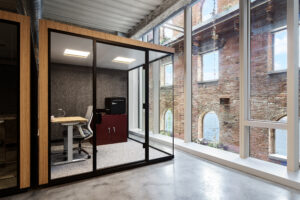
Framework’s private pods give your day a clear beginning and end. Come in for your morning deep-work block, do your best thinking somewhere built for it, and leave the work behind when you walk out the door.
TLDR
Why it matters now: Daylight saving time ended November 1. With sunset before 5 p.m., unstructured workdays tend to shrink or sprawl, right when the last productive weeks of the year are on the line.
Key takeaways:
- Move deep work into the bright morning hours
- Set a firm end to the workday instead of letting darkness decide
- Schedule easy tasks for the afternoon energy dip
- Lock in a weekly rhythm now to protect the weeks before Thanksgiving
For more inspiration, follow us on Instagram, X, LinkedIn, or Facebook!